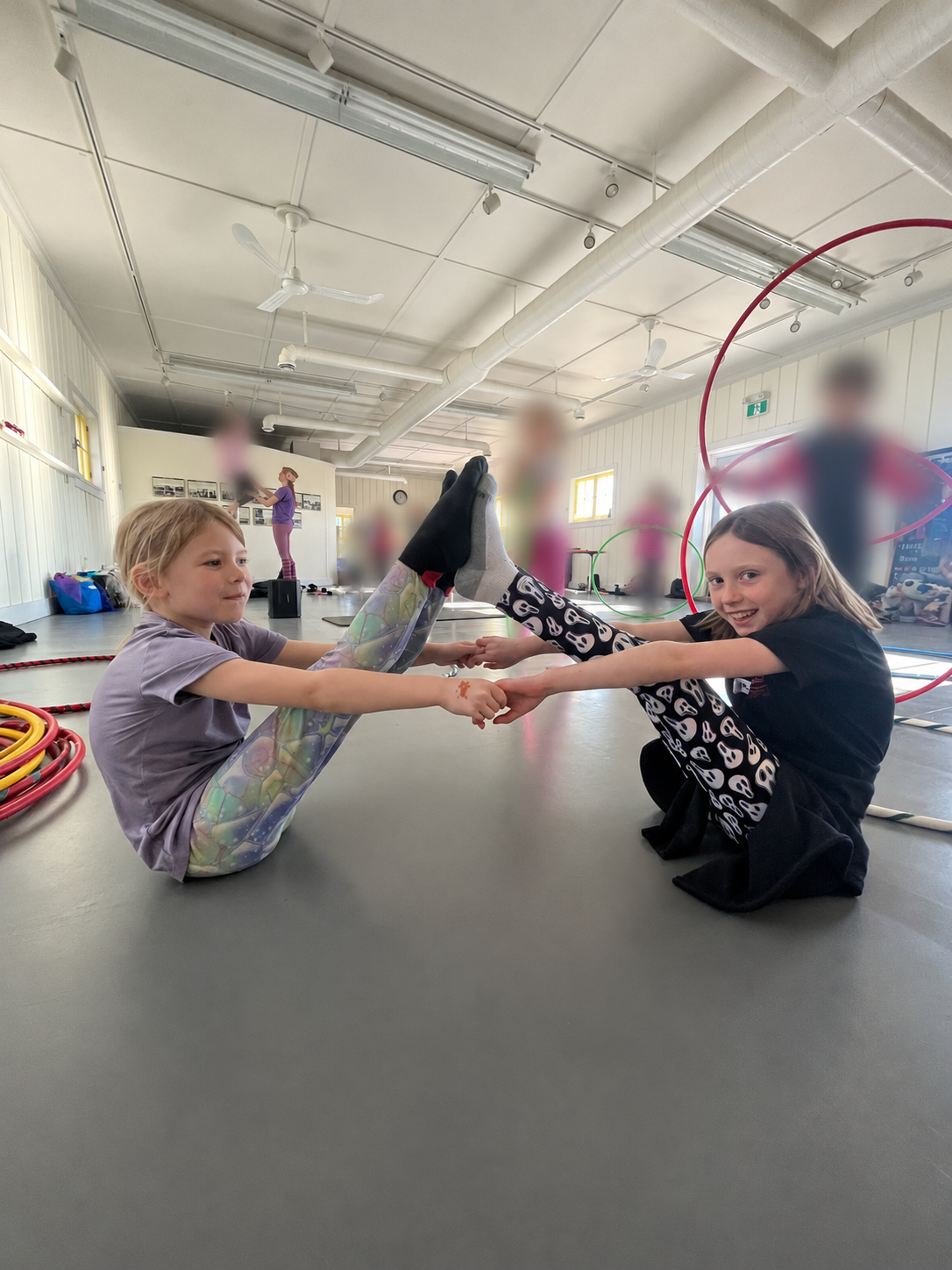
Circus arts offer a unique and powerful avenue for youth development, providing a blend of physical, social, and emotional growth that few other activities can match. Through the diverse disciplines of circus—such as aerial arts, juggling, and acrobatics—young participants gain not only physical skills but also invaluable life lessons in teamwork, perseverance, and self-expression.
One of the most significant benefits of circus arts is its ability to foster a strong sense of community among participants. The inherently collaborative nature of circus work, where success often depends on mutual trust and support, allows campers to build deep connections with their peers. A striking example from our recent camp was a camper who initially exhibited bullying behavior. Through the process of working together with others on challenging tasks, this child gradually built trust with both staff and fellow campers. By the end of camp, this camper had transformed, emerging as a leader and a positive influence on others. This journey from distrust to cooperation exemplifies the profound impact that circus arts can have on a child's social development.
Another remarkable aspect of circus arts is the shared triumph that comes with mastering difficult tricks. Every camper knows the effort it takes to achieve these feats, and when one of them succeeds, the entire group celebrates. It’s particularly moving to witness a child who might not often receive recognition be showered with applause and congratulations from their peers after nailing a tough trick. This collective celebration not only boosts the individual’s confidence but also strengthens the community bond among campers.
Circus arts also champion the "weird" kids—those who might feel out of place in other environments. At our camp, we were successful in getting every child to perform, ensuring that each had their moment to shine. What stood out most was how kids who are a little different found their place in the circus. They were able to create their own unique acts, reflecting their personalities and creativity, and their peers responded with enthusiasm and admiration. This positive environment not only allowed these children to express themselves fully but also inspired other campers to embrace their own uniqueness.
In conclusion, circus arts provide an inclusive and empowering space for youth to develop physically, socially, and emotionally. The examples from our camp highlight the transformative impact that this art form can have, especially for children who might struggle to find their place elsewhere. By supporting this program, you are not only fostering the growth of individual campers but also contributing to the creation of a supportive, inclusive community where every child can thrive.